Asgard’s Wrath 2
Project Details
Role: Gameplay Engineer
Project Type: Professional - Sanzaru Games @ Meta
Engine: Unreal Engine 4
Platform: Meta Quest 2 / 3
Language: C++
Status: Released on December 15, 2023
Accolades:
Multiple awards including “Immersive Reality Game of the Year” Award at the 27th DICE Awards.
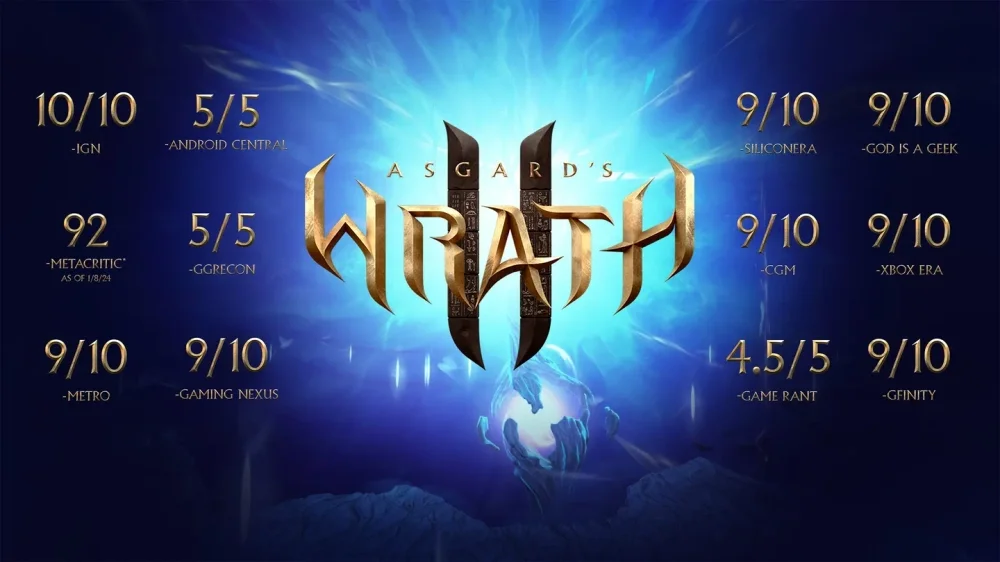
Critical acclaim reviews, including 10/10 rating from IGN, with a Metacritic score of 86.
About
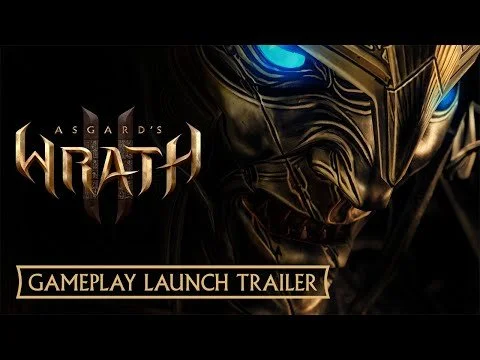
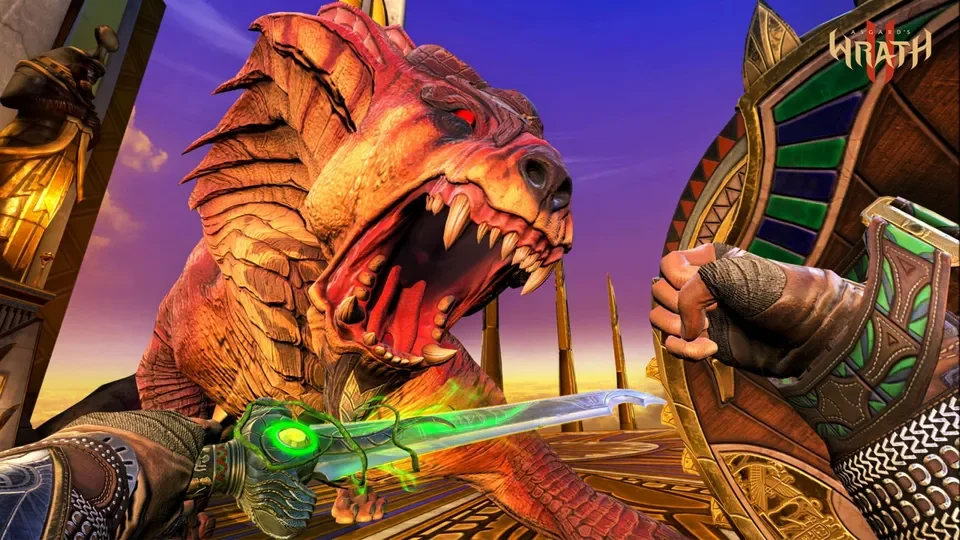
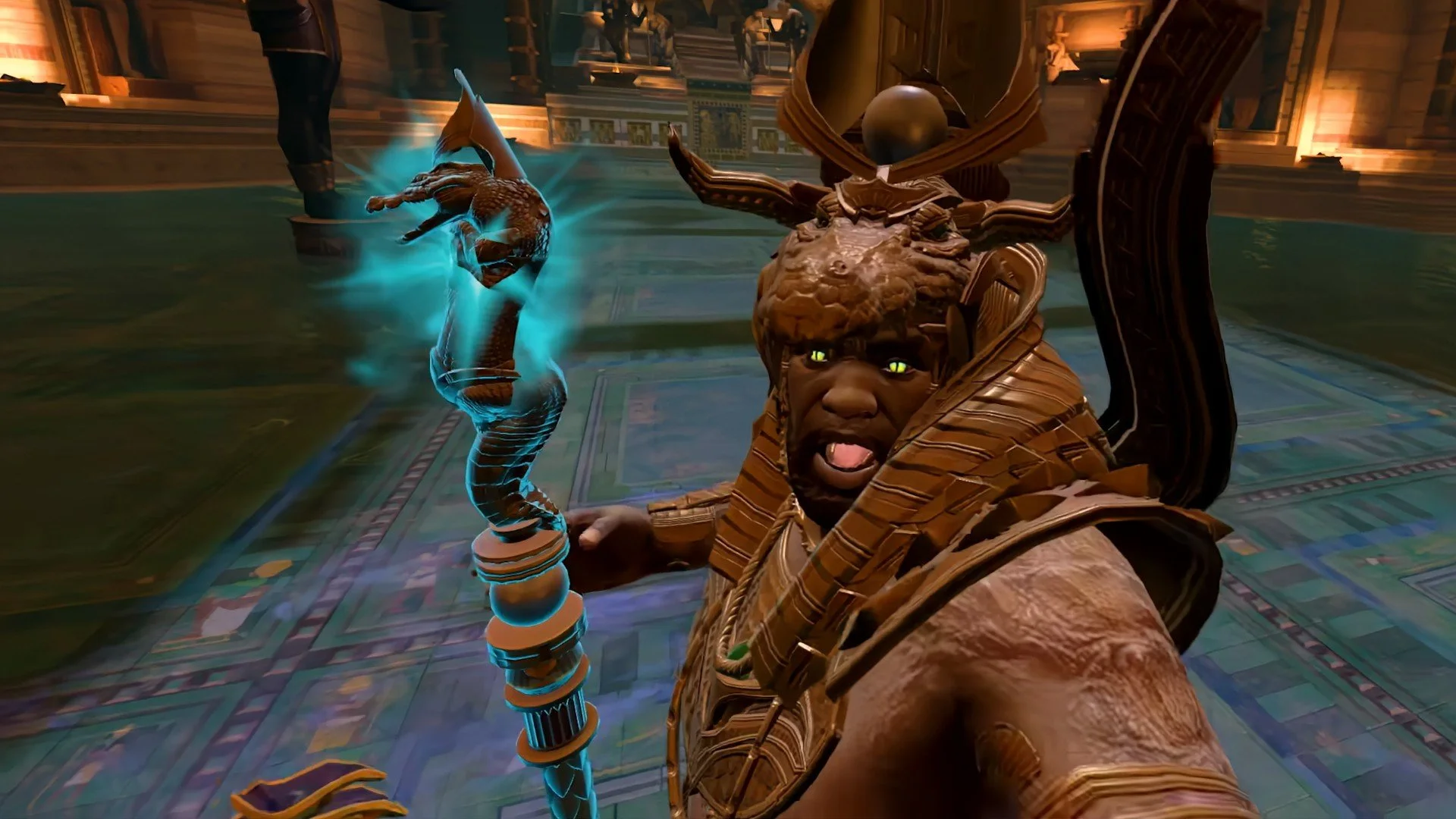
Asgard’s Wrath 2 is a AAA VR action RPG shipped on Meta Quest 2/3. This was my first AAA project as a Gameplay Engineer, focusing on character-related features and systems for the player and AI.
Development COntribution
AI
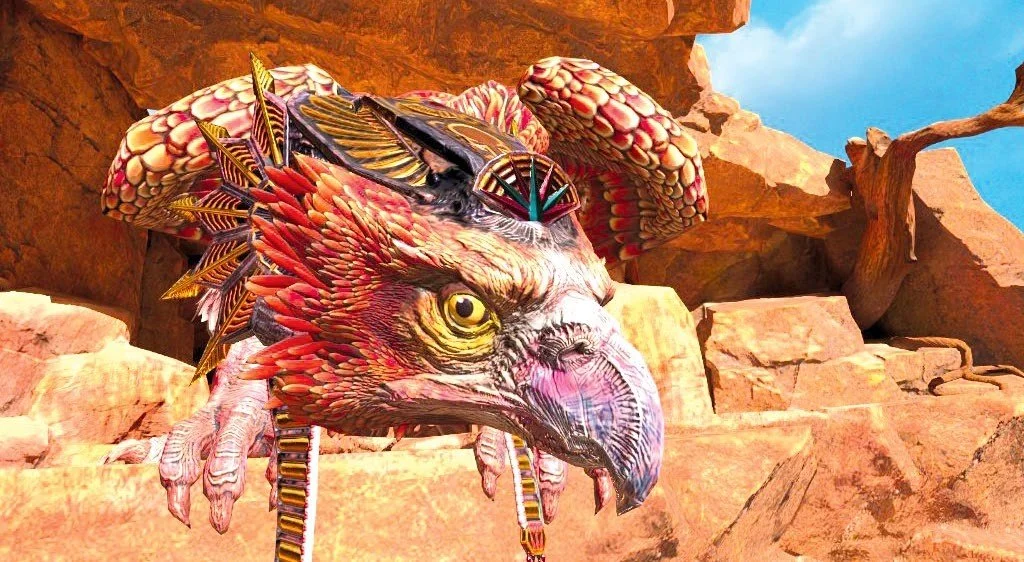
Received full ownership of the Heru NPC in the hideout. Created an AI controller with a state machine to handle various player interactions (Ex: Reacting to thumbs up and thumbs down gestures, eating pomegranates and other food items, and being petted), trigger cinematic events to reward players with cosmetics items based on reputation, and tracking narrative progression for the “Peace Offering” side quest.
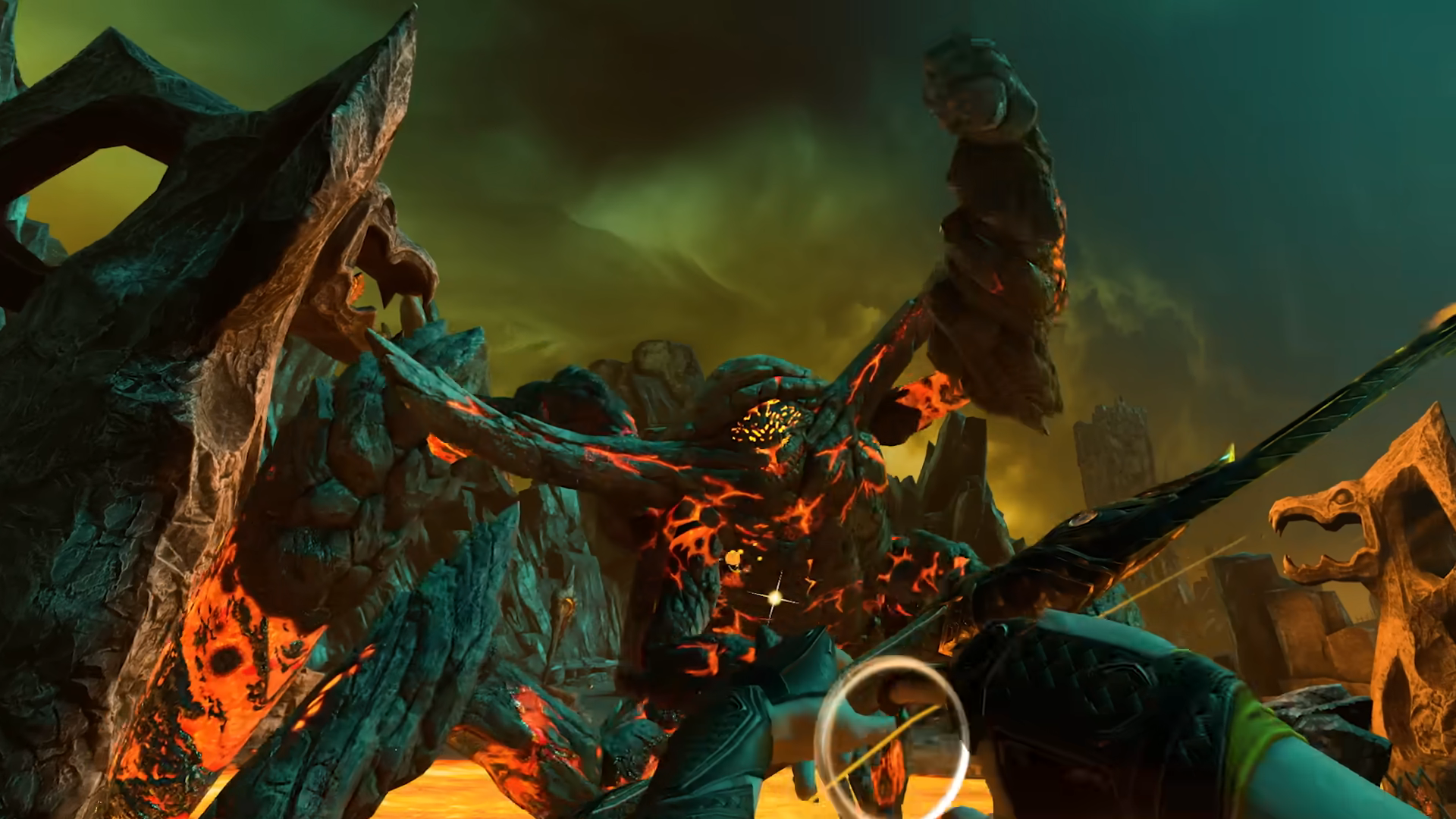
Contributed towards implementing and optimizing 9 bosses: Deathstalker, Sekhmet, Anubis, Loki, Eythingamathur / Hermathur, Set, Wind Serpopard, Water Serpopard, Sobek.
Improved boss AI combat authoring workflows by extending the data-driven XML system to give designers direct control over attack sequencing based on player actions and phase transitions, reducing iteration time and engineering dependency.
Created a stationary spin AI attack framework with tunable values, such as rotation speed, for Eythingamathur, Wind Serpopard, and Water Serpopard bosses.
Created a AI sound stimuli for the horn item, where an enemy can use to emit a sound to alert other allies nearby and/or spawn additional reinforcements. In addition, the player can also choose to pick up this item and alert nearby enemies themselves.
Combat
Designed and implemented a “Grapple Projectile Component”, allowing the player to grapple enemy projectiles and throw it back towards the attacker.
Architected and developed the “Enemy VO” anim notify used during combat. This gave designers control over playing VO lines during combat, such as boss encounters, where hints can be delivered in a more diegetic fashion without needing UI pop-ups.
Designed and implemented a “Grab Player” anim notify used during boss encounters, such as Sobek. This was used to allow enemies to grab the player with their hands and perform punches / headbutts, while keeping the player stationary and in position (Ex: If player moves in real-life, their position in-game will not change while being grabbed)
Created a radial nav raycast system for handling movement for larger enemy types, preventing them from clipping and pushing the player out of bounds, while also being able to perform attacks to inflict damage.
Expanded the status/effect system to include the fear mechanic, where enemies can become frighten enough to run away during combat. Designers were able to apply buffs/debuffs to expediate or slow down the process for scaring enemies away.
Expanded the weakpoint system to enable designers to specify a max limit when inflicting damage onto a weak point, to better pace combat fights, especially for boss encounters.
Items / Weapons
Created and implemented the Surtur’s Bow weapon, a god prop used for destroying the Norse God statues during the “The Wolf and The Boar” main quest. During this quest, players are tasked to send projectiles back to destroy statues by using this key item, as part of progressing the main story.
Playable Characters
Contributed towards setting up the Baba player character in the hideout for the “Monkey Business” side quest. This offered the player a unique experience to possess the Baba NPC and traverse hidden areas of the hideout to find 3 hidden monkey statues.
Optimization
Optimized CPU cost for boss fights by utilizing Unreal Insights to pinpoint bottlenecks, such as restructuring design-authored blueprints for performing unique AI attacks efficiently and reducing number of collision components on characters to reduce move transform updates.